
Gestalt Practice
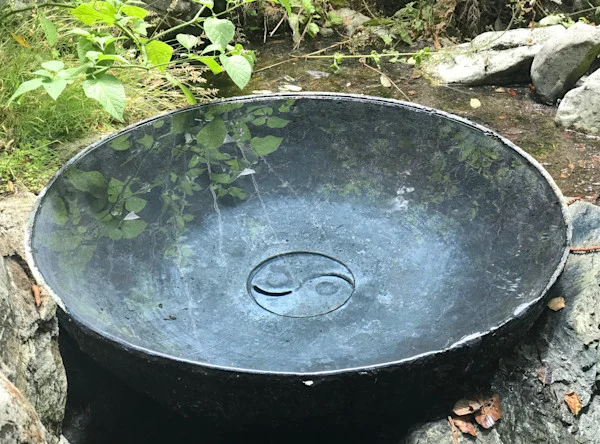
We can make our minds so like still water that beings gather about us that they may see, it may be, their own images, and so live for a moment with a clearer, perhaps even with a fiercer life because of our quiet.
~ W. B. Yeats
The material on this page is an introduction to gestalt practice. Detailed resources, including practices, history, and terminology, are available below.
The following is Richard “Dick” Price’s original description of gestalt practice, composed in the early 1970s when Fritz Perls encouraged him to offer gestalt workshops. Over the next 15 years, he taught and practiced this approach, primarily at Esalen Institute, where he was a co-founder and director. He and his wife, Christine Price, developed the work together until he died in 1985.
“Gestalt practice is a form — nonanalytic, noncoercive, nonjudgmental — derived from the work of Fritz Perls and influenced by Buddhist practice. The work integrates ways of personal clearing and development that are both ancient and modern. To the extent that awareness is made primary, gestalt practice has a strong relationship to some forms of meditation. Emotional and energetic release and rebalancing are also allowed and encouraged.
The emphasis is intrapersonal rather than interpersonal. Participants are not patients but persons actively consenting to explore in awareness. The leader functions to reflect, clarify, and respect whatever emerges in this process. The aim is unfoldment, wholeness, and growth, rather than adjustment, cure, or accomplishment.”
In other words…
Nonanalytic, noncoercive, nonjudgmental
Gestalt practice focuses on contacting direct experience rather than explaining it. It is an open-ended exploration: nowhere to go, nothing to fix, nothing to accomplish — other than being with whatever is arising, moment by moment.
Fritz Perls, Buddhist practice, Wilhelm Reich, Alan Watts
The study of gestalt practice refers to these teachers and teachings and how they informed Dick’s development of gestalt practice.
Personal clearing and development
This practice attends to both clearing and cultivating. Clearing involves becoming aware of and eventually letting go of what no longer serves us as evolving organisms. Cultivating entails recognizing resources, inner and outer, that can be discovered and nurtured with awareness.
Ancient and modern
If an approach enhances awareness and presence in any realm, we may choose to explore it.
Awareness made primary, relative to action
Developing a depth of awareness and the ability to be present is the primary goal of gestalt practice. Fritz Perls and Dick both asserted that awareness itself is healing. Action that is informed by a full-bodied awareness may have better results.
Strong relationship to some forms of meditation
Gestalt practice itself is a form of meditation that allows for active expression. Like many other meditative approaches, awareness of breathing is central, and the practice is most rewarding when integrated into daily life. For many, this becomes a spiritual practice.
Similar to some Reichian work
As in Reichian work, experimenting with breathing, sounding, and moving as forms of vital expression is allowed and encouraged. Physical, energetic awareness is emphasized, the wisdom of the body is recognized, impulse is noticed and sometimes followed, and patterns of tension, as well as the possibilities of release, are explored.
Emphasis is intrapersonal rather than interpersonal
Attending to the direct experience of ourselves and our environment is given precedence over interpersonal exploration, although that can be included. When supporting or witnessing others, self-awareness is encouraged, while offering advice, analysis, interpretation, or judgment of another’s experience is strongly discouraged.
Participants are not patients but persons actively consenting to explore in awareness
This is not based on a therapeutic or medical model: no diagnosis, no cure. This is art, sport, and human unfoldment. Each person is considered the expert of their experience and responsible for their choices during the process.
The teacher functions to reflect, clarify, and respect whatever emerges in this process
The teacher/reflector offers their presence, their encouragement, and their curiosity as part of the exploration. The teacher/reflector witnesses, mirrors, supports, sometimes coaches, and is an active student of this practice also.
The aim is unfoldment, wholeness, and growth, rather than adjustment, cure, or accomplishment
"If it's broke, don't fix it." Rather than trying to change, the aim is to meet “what is” with deep listening and an open mind. We practice meeting what we notice with patience, kindness, curiosity, and humor, allowing change to emerge out of that process. This in itself is a radical change for most of us. Rather than trying to make the ocean of experience flat and even, this is a practice of learning to surf the ups and downs of inner and outer life -— and maybe, over time, enjoy the ride.
Dick’s experiences at the hands of the mental health system influenced how he shaped gestalt practice. He rejected diagnosis, interpretation, and coercion, implementing a nonjudgmental, noncoercive atmosphere for exploring. This is reflected in the language he used: participants are not patients; they are initiators recognized as authorities on their own experience. The group leader or support person is referred to as the reflector. They do not interpret, fix, or advise; they follow process, support the lead of the initiator, and reflect what arises, bringing their own awareness and curiosity to a mutual inquiry.
A primary focus of gestalt practice is how we meet experience, the quality of awareness we bring to inner and outer contact. Although specific figures — questions, dreams, relationships, body sensations, memories, or other issues — may be explored directly, being in touch with experience in the moment takes precedence over problem-solving or achieving a particular result. The fundamental question, “What am I noticing now?” grounds the exploration. Awareness of breathing, physical sensation, and internal and external support are included as resources throughout. Open seat sessions are an essential form of gestalt practice. In open seat, one person brings awareness to whatever is arising or needing attention. Another person offers reflection, and the group offers presence. This form is used in group meetings and individual sessions.
Ideally, gestalt practice is also a community or “congregational” practice, with group exploration seen as essential. Private, individual sessions and personal awareness practice add important dimensions, while group work offers compassionate witnessing, here and now contact, shared reality testing, and significant learning during the exploration of others. Students of this practice also meet together, exchanging the roles of explorer and supporter (initiator and reflector).
The following resources provide in-depth information: